


Dear Chartrflex Community,
We're delighted to share insights that can help you make smarter decisions about your seasonal equipment needs. Whether you're a weekend warrior gearing up for summer adventures or a homeowner tackling seasonal projects, the age-old question remains: should you rent or buy? Today, we're diving deep into this topic to help you maximize your budget while getting access to the tools and equipment you need, when you need them.
At Chartrflex, we believe in empowering our community with the knowledge to make informed choices that benefit both your wallet and the environment. Let's explore the factors that should guide your decision-making process.
Understanding Your Seasonal Equipment Needs
Before we dive into the rent vs buy debate, it's important to honestly assess your usage patterns. Seasonal equipment typically includes items like lawn care tools, snow removal equipment, camping gear, holiday decorations, sports equipment, and home improvement tools that you might only use for a few months each year.
The key question isn't just about upfront costs: it's about understanding the total cost of ownership versus the convenience and flexibility of renting. When you factor in storage, maintenance, depreciation, and the opportunity cost of tying up capital, the picture becomes more nuanced.
The Case for Renting: Flexibility Meets Affordability
Core Strengths of Renting
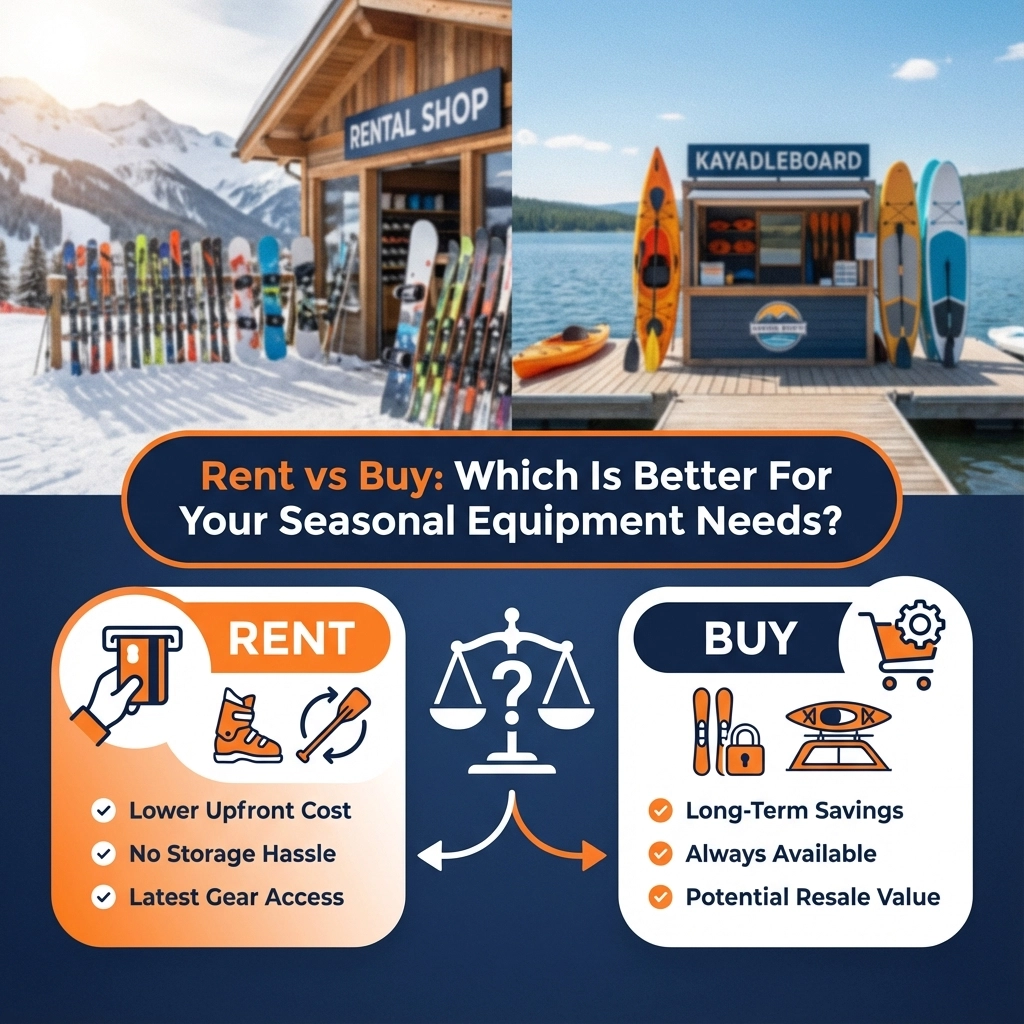
Renting shines brightest when dealing with equipment you use sporadically or seasonally. It offers unmatched flexibility and eliminates many of the headaches associated with ownership, making it an attractive option for most seasonal needs.
Key Advantages
Lower Upfront Investment: Renting requires minimal initial capital, allowing you to preserve cash flow for other priorities. Instead of dropping $500 on a pressure washer you'll use twice a year, you can rent one for $50 per use and invest the savings elsewhere.
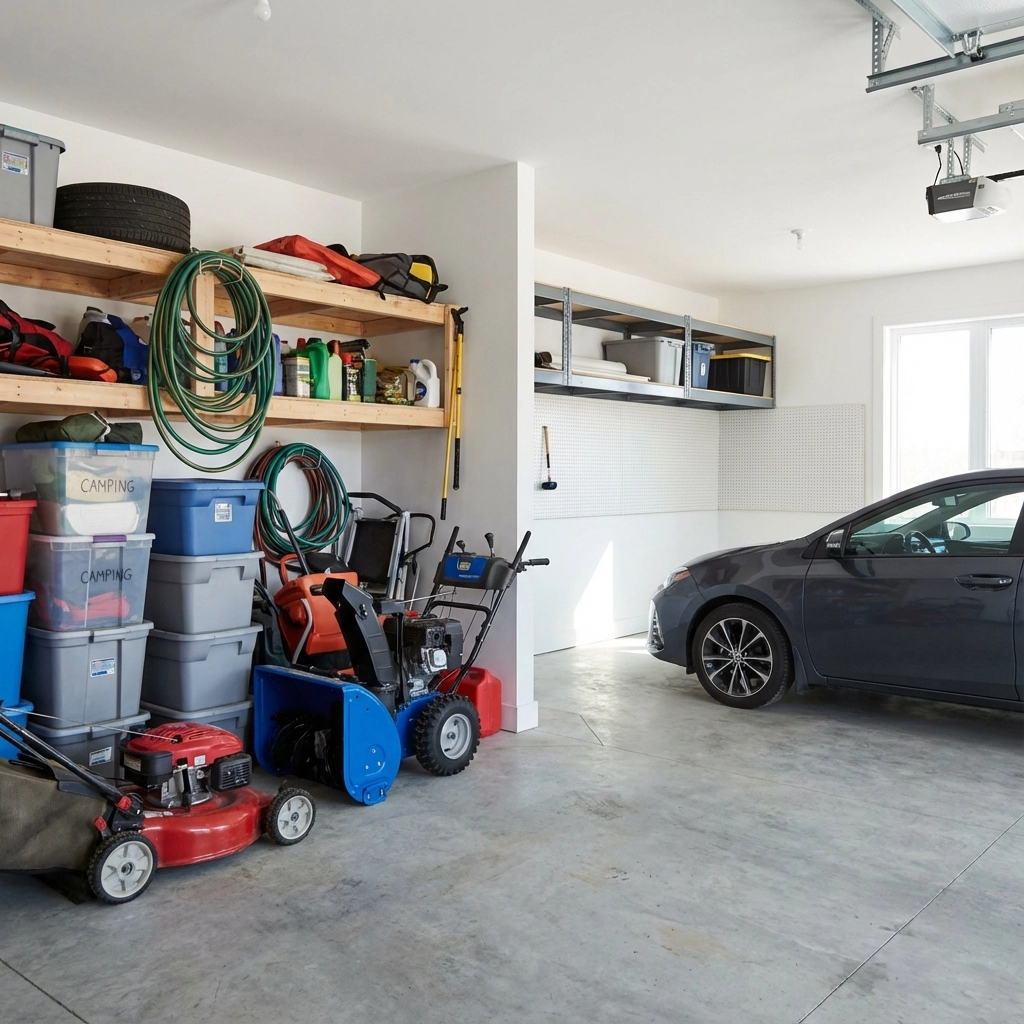
No Storage Hassles: Seasonal equipment takes up valuable space in your garage, basement, or shed. When you rent through platforms like Chartrflex, you eliminate storage concerns entirely: someone else handles the space requirements while you get access when needed.
Always Current Technology: Rental equipment is typically well-maintained and updated regularly. You'll have access to the latest models with improved efficiency and features without worrying about your own equipment becoming obsolete.
Maintenance-Free Experience: When you rent, maintenance and repairs are typically the owner's responsibility (barring misuse). This eliminates unexpected costs and the time investment required for upkeep.
Try Before You Commit: Renting allows you to test different brands and models before making a purchase decision. This is particularly valuable for expensive equipment where compatibility and preferences matter.
Potential Drawbacks
Availability Challenges: During peak seasons, popular equipment might be booked, potentially disrupting your plans. Planning ahead and booking early can mitigate this issue.
Cost Accumulation: While individual rentals are affordable, frequent use over many years can eventually exceed purchase costs. The break-even point typically occurs around 60-70% annual utilization.
Limited Customization: Rental equipment comes as-is, and you can't modify it to suit specific needs or preferences.
The Case for Buying: Long-term Value and Control
Core Strengths of Ownership
Buying makes sense when you use equipment consistently enough that ownership costs become justified, or when you have specific requirements that benefit from customization and complete control.
Key Advantages
Long-term Cost Savings: Once paid off, owned equipment eliminates recurring rental costs. If you use a snowblower every winter for multiple years, ownership eventually becomes more economical.
Complete Control: You decide when and how to use your equipment, with no booking requirements or availability concerns. Your schedule isn't dependent on someone else's calendar.
Customization Freedom: Owned equipment can be modified, upgraded, or configured to meet your specific needs and preferences.
Asset Building: Equipment represents a tangible asset that contributes to your personal wealth and can be sold or traded when no longer needed.
Potential Drawbacks
Significant Upfront Costs: Quality seasonal equipment often requires substantial initial investment, which can strain budgets and tie up capital that could be used elsewhere.
Ongoing Maintenance Responsibility: Ownership includes maintenance, repairs, insurance, and storage costs that accumulate over time. A lawn mower might need annual tune-ups, replacement parts, and winter storage preparation.
Depreciation Risk: Equipment loses value over time and may become obsolete with technological advances. What seemed like a good investment initially might not hold its value.
Storage Requirements: You need adequate space to store equipment safely during off-seasons, which might require additional storage solutions or facility costs.
Making the Right Choice: A Framework for Decision
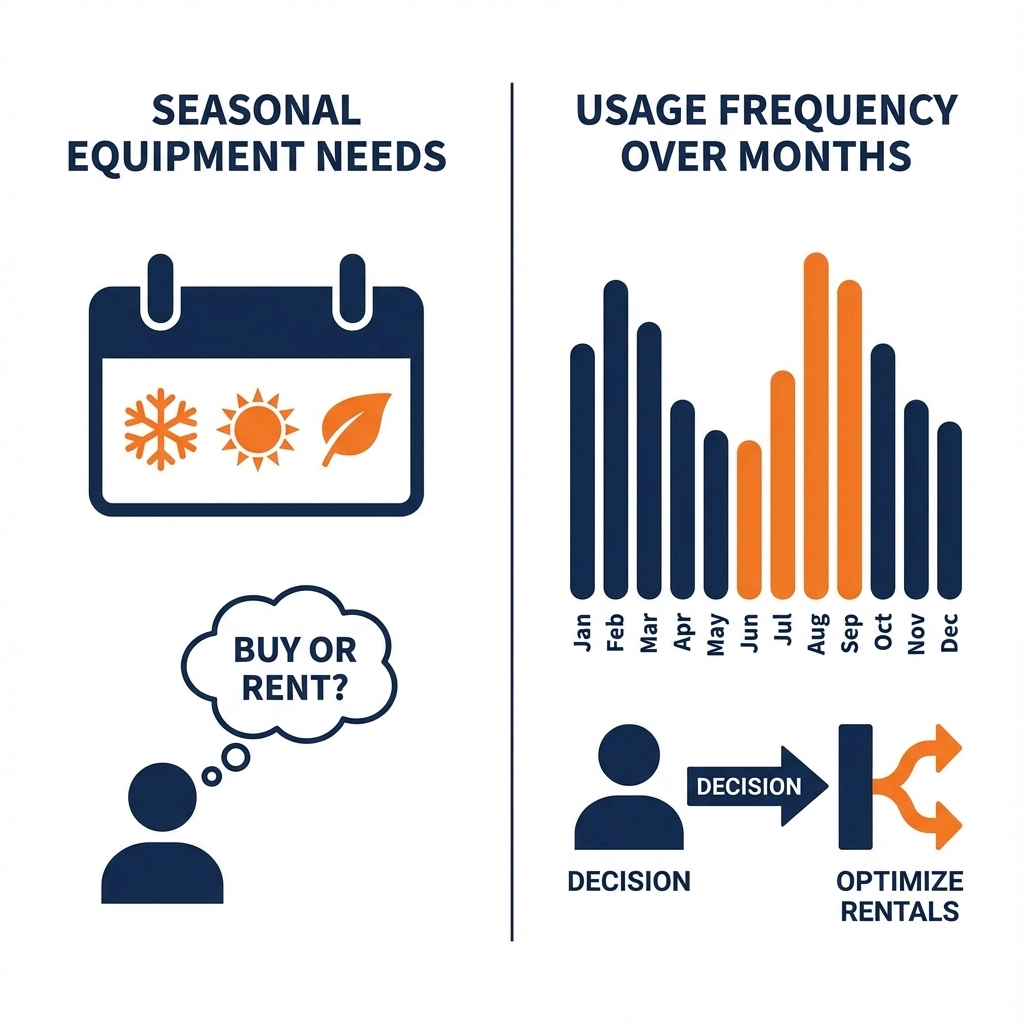
Here's a practical framework to guide your rent vs buy decisions:
| Factor | Rent If | Buy If |
|---|---|---|
| Usage Frequency | Less than 20 days per year | More than 50 days per year |
| Storage Space | Limited or expensive | Ample and secure |
| Upfront Budget | Cash flow constraints | Capital available |
| Maintenance Comfort | Prefer hands-off approach | Enjoy DIY maintenance |
| Equipment Variety | Need different models occasionally | Consistent requirements |
| Technology Importance | Want latest features always | Satisfied with proven models |
Seasonal Equipment Categories: Tailored Recommendations
Lawn Care Equipment
For most suburbanites, renting lawn care equipment makes sense. Unless you have a large property requiring weekly attention, the combination of storage challenges and seasonal usage patterns favor renting. A quality mower might cost $400-800, but seasonal rentals through community platforms cost significantly less.
Snow Removal Equipment
Snow equipment presents an interesting case. In areas with heavy, consistent snowfall, ownership might be justified. However, for occasional snow events or areas with mild winters, renting eliminates the storage and maintenance burden for equipment that might sit unused for years.
Camping and Outdoor Gear
High-quality camping equipment is expensive and takes up considerable storage space. Unless you're camping frequently throughout the year, renting allows you to access premium gear without the commitment. This is particularly valuable for specialty items like kayaks, climbing equipment, or large camping setups.
Home Improvement Tools
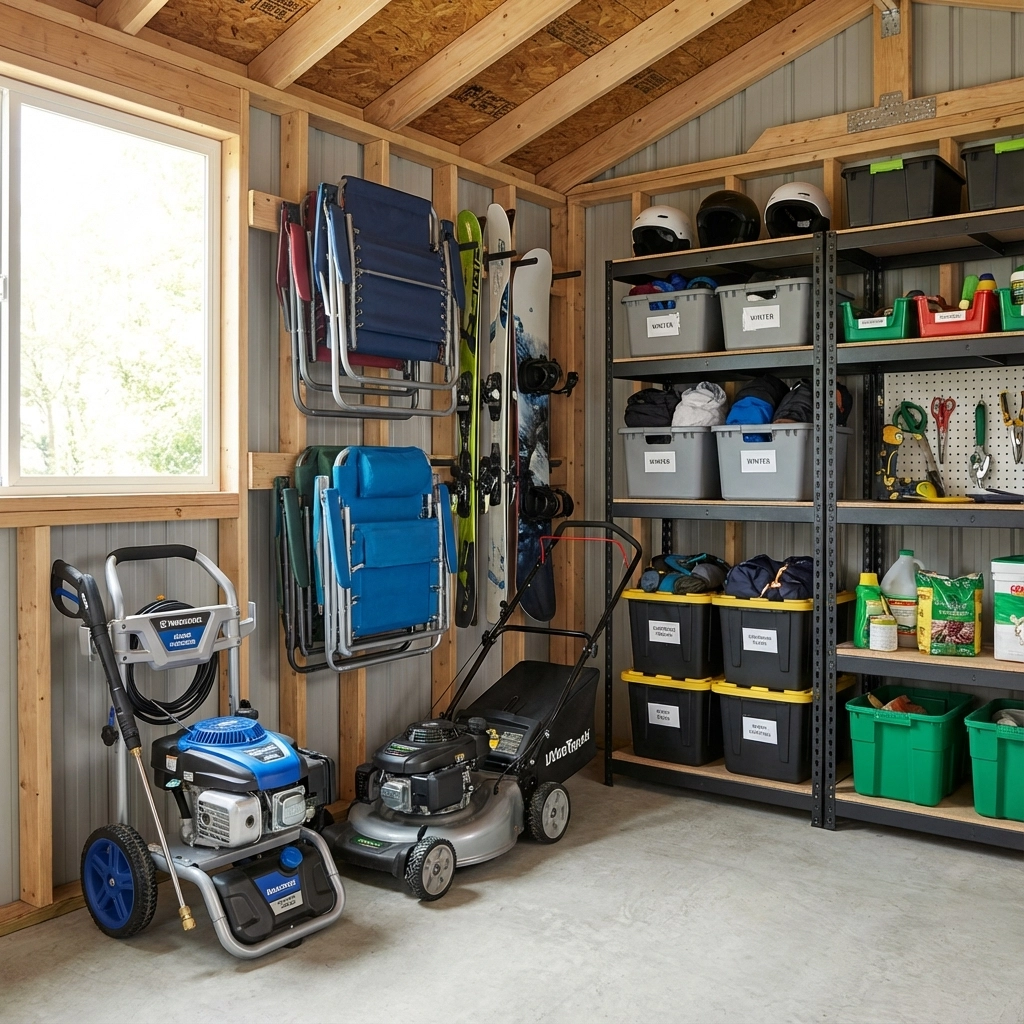
Power tools and specialized equipment for seasonal projects are prime rental candidates. Why buy a tile saw for one bathroom renovation or a power washer for annual deck maintenance? Renting ensures you have professional-grade tools for specific projects without long-term storage commitments.
The Chartrflex Advantage: Community-Powered Solutions
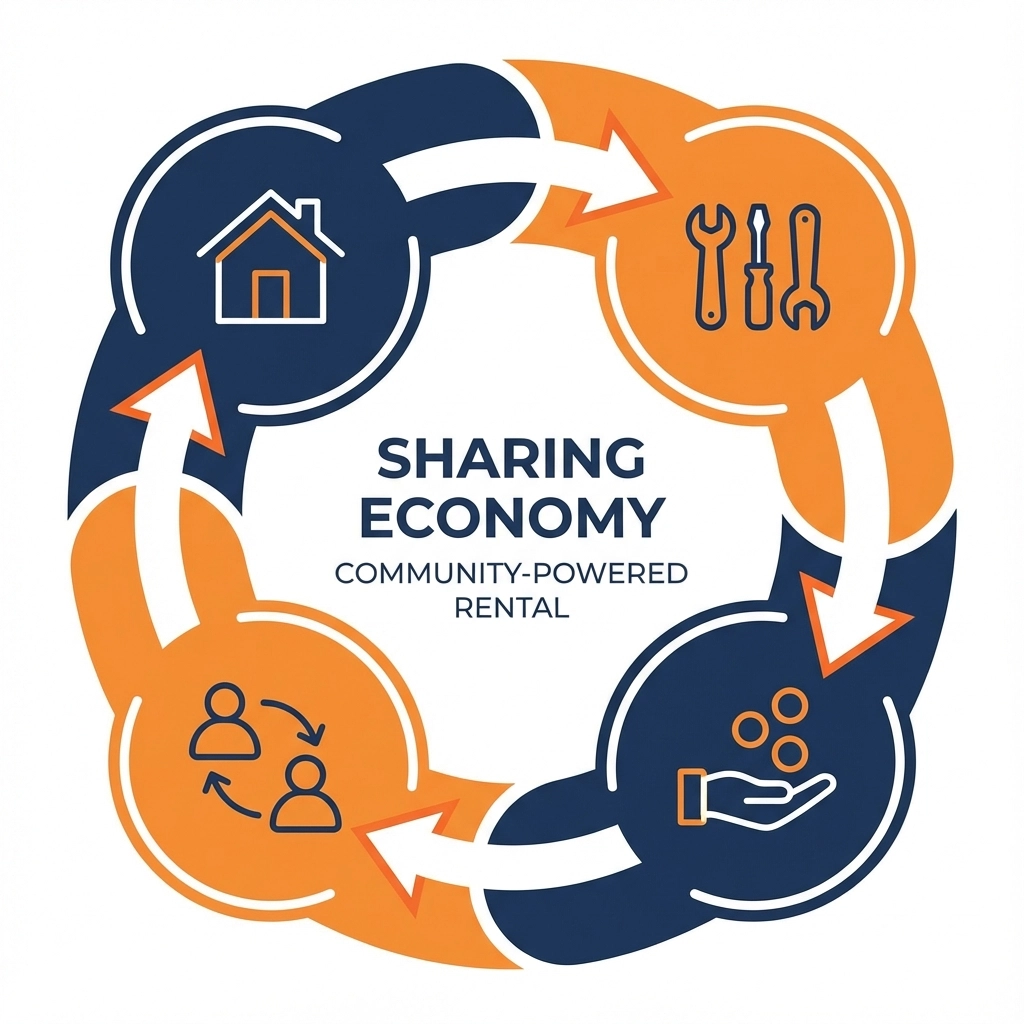
Through our peer-to-peer platform at Chartrflex, we're creating a new model that combines the benefits of renting with community connection. When you rent from neighbors, you're not just saving money: you're building relationships and supporting local community members who are monetizing their own seasonal equipment.
This approach offers several unique advantages:
- Local Availability: Equipment is typically nearby, making pickup and return convenient
- Personal Relationships: Direct interaction with equipment owners who can provide usage tips and recommendations
- Community Building: Supporting neighbors while meeting your own needs creates positive local economic impact
- Environmental Benefits: Maximizing utilization of existing equipment reduces manufacturing demand and waste
Financial Impact Analysis
Let's look at a real-world example using a pressure washer:
Buying Scenario:
- Purchase price: $300
- Annual maintenance: $25
- Storage space opportunity cost: $10/year
- Depreciation over 5 years: $200
- Total 5-year cost: $375
- Cost per use (assuming 10 uses): $37.50
Renting Scenario:
- Rental cost per use: $40
- Total 5-year cost (10 uses): $400
- No maintenance, storage, or depreciation concerns
In this example, buying offers slight savings, but renting provides significant convenience and eliminates various ownership hassles. The decision ultimately depends on your personal priorities and circumstances.
Environmental Considerations
Community sharing through platforms like Chartrflex contributes to environmental sustainability by maximizing equipment utilization. When one pressure washer serves multiple households instead of each buying their own, we reduce manufacturing demand, decrease waste, and minimize the environmental footprint of seasonal equipment needs.
This sharing economy model aligns with growing environmental consciousness while providing economic benefits to both renters and equipment owners.
Making Your Decision: Key Questions to Ask
Before deciding whether to rent or buy seasonal equipment, consider these essential questions:
- How many days per year will you realistically use this equipment?
- Do you have adequate storage space that doesn't compromise other priorities?
- Are you comfortable handling maintenance and repairs?
- Does your budget allow for the upfront investment without straining other goals?
- Will you use this equipment consistently for multiple years?
- Are there community sharing options available in your area?
The Future of Seasonal Equipment Access
We're excited about the growing trend toward access over ownership, particularly for seasonal equipment. Community sharing platforms are making it easier than ever to access what you need without the burdens of ownership, while creating new income opportunities for equipment owners.
As we continue building the Chartrflex community, we're seeing firsthand how this model benefits everyone involved: renters save money and space, owners generate income from idle equipment, and communities become more connected and sustainable.
Your Next Steps
Ready to make smarter decisions about your seasonal equipment needs? Start by honestly assessing your usage patterns and storage situation. For most seasonal applications, renting offers compelling advantages in terms of cost, convenience, and flexibility.
We invite you to explore the growing selection of seasonal equipment available through our community platform and connect with neighbors who can help you tackle your next project without the commitment of ownership.
What seasonal equipment challenges are you facing? Share your experiences and questions with our community: together, we can help everyone make more informed, economical, and sustainable choices.
Warm regards,
The Chartrflex Team


Like (0)