


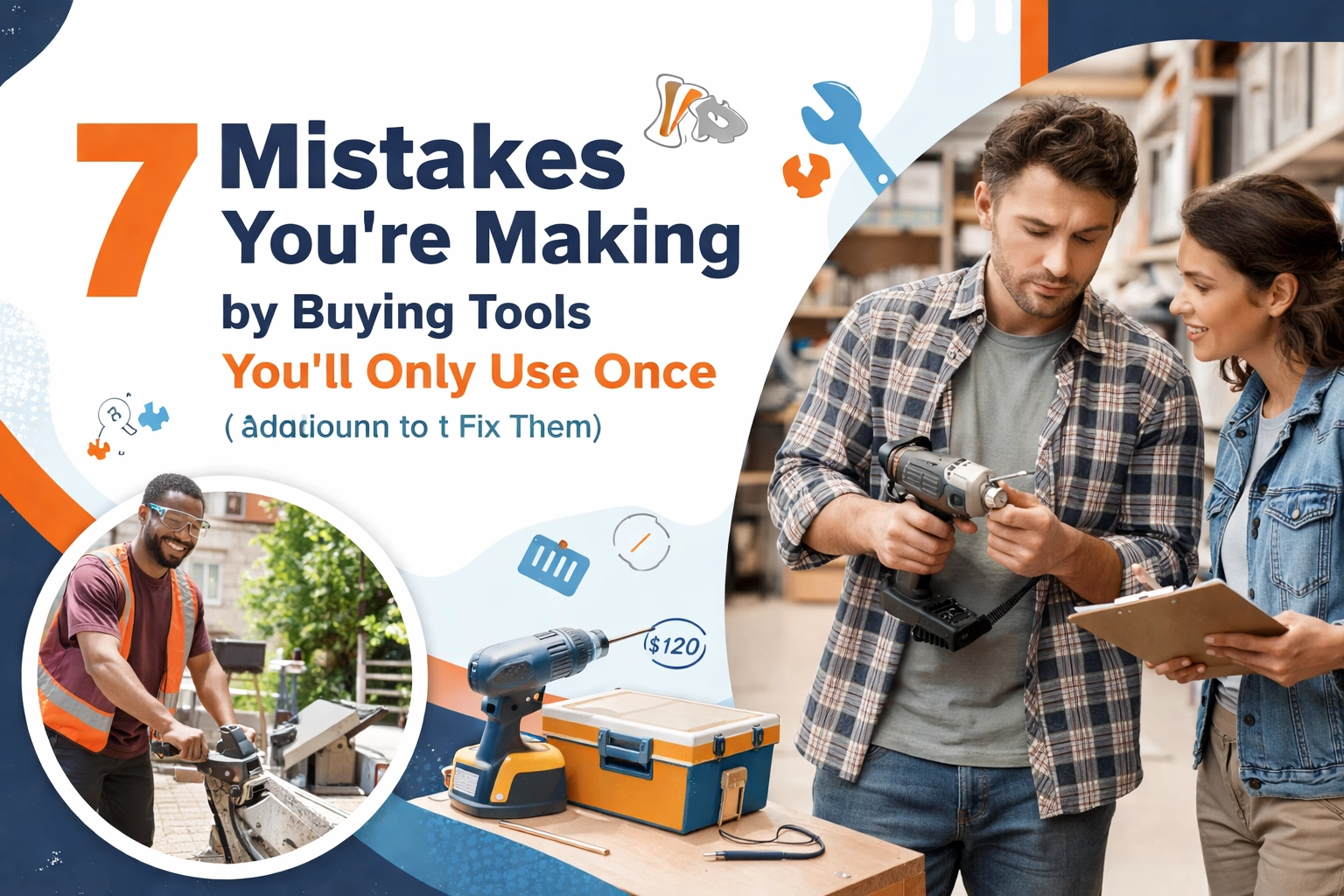
Let's be honest: we've all been there. You're standing in the hardware store aisle, eyeing that shiny new power washer because your deck looks like it survived a mud wrestling competition. You convince yourself it's a solid investment. Fast forward six months, and that power washer is collecting dust in the corner of your garage, right next to the tile saw from your "one-time" bathroom project.
Sound familiar? You're not alone. Across Boston, Cambridge, and neighborhoods everywhere, garages and basements are overflowing with tools that served their purpose exactly once. But here's the good news: there's a smarter way to tackle your projects without the buyer's remorse. Let's break down the seven biggest mistakes people make when buying tools they'll barely use: and how you can fix them.
Mistake #1: Underestimating Storage Space (Welcome to the Garage Graveyard)
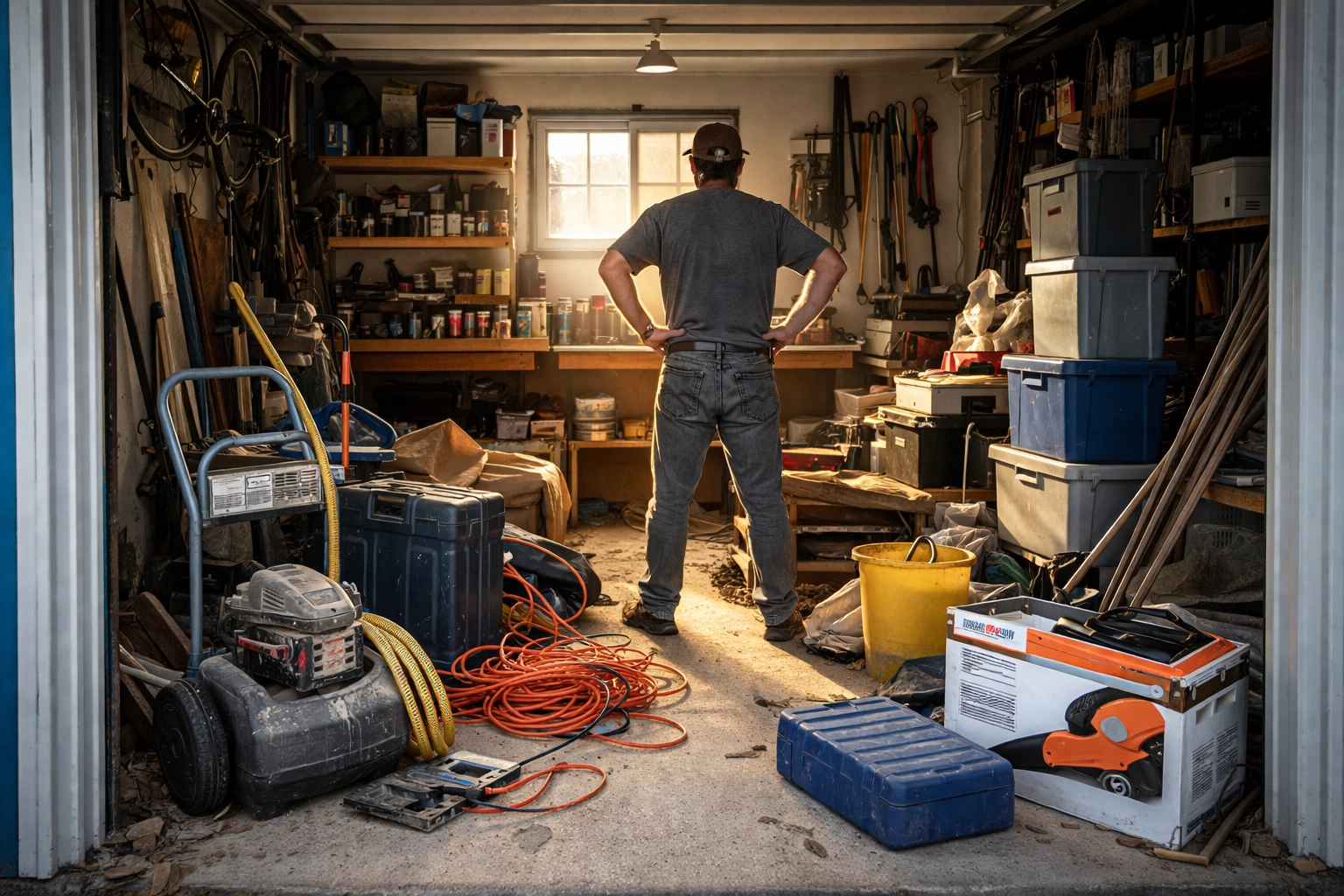
That cordless leaf blower seemed compact in the store. But once you got it home, along with its charger, attachments, and the box you're "definitely going to need for the warranty," suddenly your garage looks like a tool hoarder's paradise.
Here's the thing: every tool you buy needs a home. And in cities like Boston where space is already at a premium, that square footage adds up fast. Before you know it, you can't park your car in the garage anymore because your once-organized space has become a graveyard of good intentions.
The fix: Before buying, ask yourself: "Where will this live for the next five years?" If you don't have a clear answer, consider renting instead. When you're done with the project, the tool goes back: no storage stress required.
Mistake #2: Ignoring Maintenance Costs and Time
Buying a tool is just the beginning. Chainsaws need chain oil and sharpening. Pressure washers need winterizing. Lawn mowers need tune-ups, spark plugs, and the occasional trip to the repair shop that somehow costs more than you expected.
Maintenance isn't just about money: it's about time. And let's face it, most of us would rather spend a Saturday afternoon doing literally anything other than maintaining a tool we used once two years ago.
The fix: Renting means someone else handles the maintenance headaches. You get a tool that's ready to work, and when you're done, you hand it back. No oil changes, no blade sharpening, no "I should really clean that" guilt trips.
Mistake #3: Paying Full Price for One-Time Utility
A quality circular saw runs anywhere from $100 to $300. A decent pressure washer? $200 to $500. A carpet cleaner for that one time your dog had an accident? Don't even get us started.
When you break down the math, paying full retail price for a tool you'll use once (maybe twice if you're ambitious) just doesn't make sense. You're essentially paying premium prices for minimal utility.
The fix: Renting lets you access professional-grade equipment for a fraction of the purchase price. That $400 power washer? Rent it for a weekend, get your deck looking pristine, and keep the rest of that money for something you'll actually enjoy: like dinner out or a weekend trip.

Mistake #4: Missing Out on Neighborly Connections
Here's a mistake most people don't even realize they're making. When you buy everything yourself, you miss out on one of the best parts of community living: connecting with your neighbors.
Think about it: borrowing a ladder from the family down the street, chatting with a neighbor about their experience with that specific drill, or helping someone figure out how to use a tool you've already mastered. These small interactions build real relationships.
In the age of online shopping and same-day delivery, we've lost some of that neighborhood fabric. But it doesn't have to be that way.
The fix: Platforms like Chartrflex are designed to bring back that community connection. When you rent from a neighbor, you're not just getting a tool: you're meeting someone in your community, maybe learning a tip or two, and supporting the local sharing economy. It's how things used to work, updated for how we live now.
Already part of the Chartrflex community? Open the app and see what your neighbors have available: you might be surprised what's right around the corner.
Mistake #5: Overlooking Safety (Using the Wrong Tool for the Job)
We've all improvised. Used a butter knife as a screwdriver. Balanced on a too-short ladder because the right one was "too expensive." Tried to make a circular saw do what a jigsaw should.
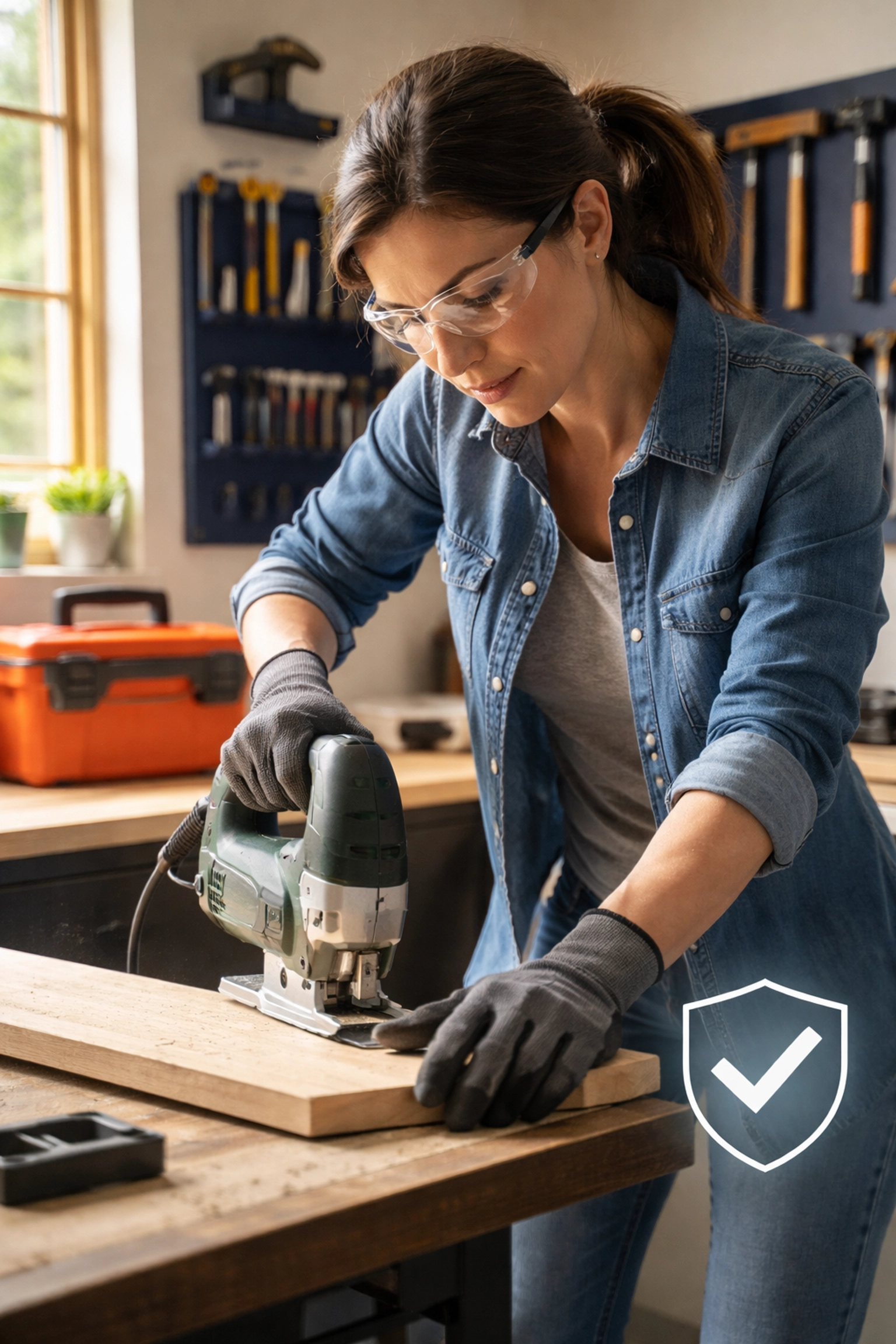
But here's the reality: using the wrong tool isn't just inefficient: it's dangerous. Every year, thousands of DIYers end up in emergency rooms because they tried to make do with what they had instead of using the right equipment.
The fix: When you have access to a wide variety of tools through renting, you can always get the right tool for the job. No more dangerous workarounds or "it'll probably be fine" moments. Your fingers (and your ER bill) will thank you.
Mistake #6: Dealing with Depreciation
That brand-new $350 miter saw loses value the moment you take it out of the box. Use it for one project, store it for a year, and try to sell it? You'll be lucky to get half what you paid.
Tools depreciate. It's just a fact. And unlike a car that you use daily, a rarely-used tool sitting in your garage is just money slowly evaporating.
The fix: Renting completely sidesteps the depreciation problem. You pay for what you use, when you use it. No long-term value loss, no trying to sell used equipment on marketplace apps, no "I paid HOW much for this?" regrets.
And here's a bonus: if you do own tools you're not using, why not turn that depreciation around? Download the Chartrflex app and list your idle tools for rent. Turn that garage graveyard into a little side income while helping your neighbors tackle their projects.
Mistake #7: Forgetting the Environmental Impact
This one's bigger than your garage. The "buy-use once-discard" cycle has real environmental consequences. Manufacturing tools requires raw materials, energy, and transportation. When millions of people each buy their own version of the same tool: most of which sit unused 99% of the time: that's a massive amount of unnecessary production and waste.
The average power drill is used for just 13 minutes in its entire lifetime. Thirteen minutes! Meanwhile, the resources to make it, ship it, and eventually dispose of it impact our planet for decades.
The fix: Sharing is genuinely one of the most impactful things you can do. When neighbors share tools, we need fewer tools overall. Less manufacturing, less waste, smaller carbon footprints. It's sustainability that actually makes your life easier, not harder.
At Chartrflex, this is core to our mission. We believe the sharing economy isn't just about saving money: it's about building stronger communities and being better stewards of our resources. Every rental is a small vote for a more sustainable way of living.
Ready to Break the Cycle?
Look, we get it. There's something satisfying about owning your own tools. But for those one-time projects: the deck staining, the tile cutting, the carpet cleaning after hosting Thanksgiving: renting just makes more sense.
You save money. You save space. You skip the maintenance. You connect with your community. You stay safer. You avoid depreciation. And you do your part for the planet.
Not bad for a simple mindset shift, right?
New to Chartrflex? Download the app and see what tools your Boston-area neighbors have available. Your next project is closer (and cheaper) than you think.
Already a Chartrflex user? Open the app, find what you need, or list those tools gathering dust in your garage. Let's keep building this community together.
Here's to smarter projects, stronger neighborhoods, and garages you can actually park in.
Warm regards,
The Chartrflex Team


Like (0)