


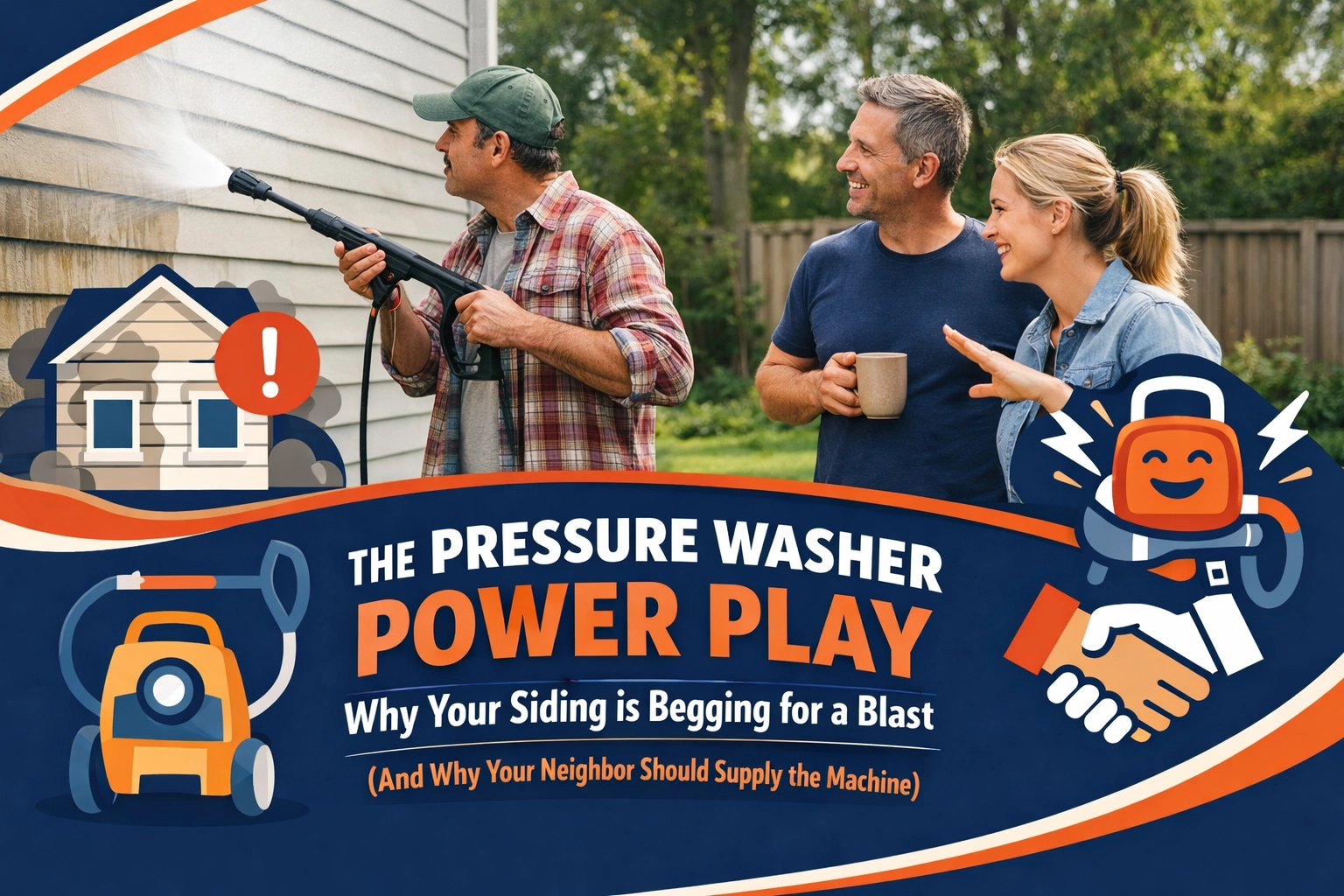
If your house is looking a little… seasonal (read: greenish, streaky, and vaguely haunted), congratulations, you’ve been visited by New England’s favorite freeloaders: algae, mildew, and grime. They show up uninvited, set up camp on your siding, and then have the nerve to make your place look like it’s auditioning for a “before” photo.
And if you live around Woburn, Reading, Burlington, or Wakefield, you already know the vibe: spring hits, pollen flies, the shade stays damp, and suddenly you’re suffering from Algae Anxiety. It’s real. It’s common. And it can be cured in one satisfying afternoon with the tool that’s basically a Super Soaker on steroids: the pressure washer.
Here’s the kicker: you do not need to buy one to use it once a year. That’s what neighbors (and Chartrflex) are for.
Meet the Villains: Dirt, Mold, Mildew, and That Weird Green Film
Let’s talk about what’s actually happening on your siding, because it’s not just “a little dirt.”
- Algae loves shaded, damp areas and spreads like gossip.
- Mold and mildew don’t just look gross; they can linger and worsen air-quality issues for some folks.
- Grime builds up slowly until one day you notice your “white” siding is actually “sad beige.”
And here’s the part people forget: leaving that gunk there isn’t only an aesthetic crime. It can contribute to long-term wear, especially as buildup holds moisture against surfaces over time. A proper wash helps restore appearance and reduce the chances of surface deterioration from contaminants that don’t belong there.
In short: your siding isn’t “weathered.” It’s dirty. And it’s begging for a blast.
The One-Day-a-Year Job (That Somehow Feels Like a Power Move)
Pressure washing is the rare home task that’s:
- Actually fast
- Weirdly fun
- Dramatically satisfying
It’s also the definition of a one-day-a-year job. You don’t need to own a machine that spends 364 days sulking in your garage behind old paint cans and a broken folding chair.
This is exactly where the sharing economy shines: rent the pressure washer when you need it, return it when you’re done, and let it go live a more meaningful life at your neighbor’s house next weekend.
That’s the Chartrflex way: fewer idle tools, more clean houses, and a little extra cash circulating locally.
Algae Anxiety in Woburn and Reading: A Love Story (That Nobody Asked For)
If you’re in Woburn or Reading, you’ve probably seen it: the north-facing side of a house that never quite dries out. It starts as faint discoloration. Then it becomes full-on green streaks that make you wonder if your home is photosynthesizing.
Call it Algae Anxiety, that creeping realization that your curb appeal is quietly slipping.
A pressure washer fixes that fast. And the best part is how immediate it is: you spray one pass and the siding basically goes, “Oh thank you. I can breathe again.”
The “Woburn Water Fight” (AKA: Splashback Humility)
Now, let’s address the rite of passage: the moment you hit the wrong angle and create a spray ricochet that drenches your shoes, your shorts, and possibly your dignity.
We call that the Woburn Water Fight.
It happens when:
- You aim too close to a corner
- You spray upward into a seam
- You forget the wind exists
- You get cocky
The solution isn’t to quit. The solution is to treat pressure washing like driving in snow: slow down, respect the physics, and don’t do anything heroic.
Pressure Washing Benefits (Beyond “My House Doesn’t Look Embarrassing”)
Yes, the main benefit is that your place looks 10x better. But pressure washing also helps with:
- Preventing buildup-related surface wear: Removing grime, algae, and mildew reduces lingering moisture and organic growth that can contribute to deterioration over time.
- Health and comfort: Mold and mildew on exterior surfaces can be irritants, especially when they’re near windows, doors, and vents.
- Curb appeal and value: Clean siding is one of the easiest “high impact, low effort” upgrades you can do.
Also? It’s faster than hand-scrubbing. Pressure washing can accomplish in hours what manual cleaning can take days to do, because nobody has time to brush their house like it’s a pet hamster.
Pressure Washer Basics (So You Don’t Accidentally Pressure-Wash Your Soul)
You don’t need to be a contractor. You just need a plan.
Choose the right pressure and nozzle
For many siding jobs, people use washers in the 2,500–3,500 PSI range (common for gas machines). But more pressure is not always better, especially if you’re close to the surface or using a narrow tip.
Quick tip:
- Wider spray tips (like 25° or 40°) are typically safer for siding than a pinpoint “laser” tip.
Keep a safe distance
A common rule of thumb: keep the nozzle roughly 12–18 inches away from siding. Closer can mean damage or water intrusion. Farther can mean you’re just misting your house like it’s a houseplant.
Spray with the siding, not against it
Avoid spraying upward into seams, lap joints, or gaps. You’re cleaning the outside, not pressure-injecting water into the wall cavity like a chaos gremlin.
Watch doors, windows, vents
Be especially careful around:
- Window trim and frames
- Door thresholds
- Dryer vents and exhaust openings
The goal is “clean,” not “surprise indoor water feature.”
When to Consider Soft Washing (AKA: The Gentler Option)
If you’ve got delicate surfaces or you’re worried about water intrusion, soft washing (lower pressure + cleaning solution) can be a better fit. It’s often used professionally because it’s gentler and can help slow regrowth of organic stuff like algae.
But for many standard siding situations, a traditional pressure wash, done carefully, gets the job done.
What to Clean in One Rental Day (Make It Count)
If you’re renting a machine for the day, you might as well leave no grime behind. A good one-day hit list:
- Vinyl siding (front + shaded side)
- Front steps and walkway
- Deck or patio (spot-test first)
- Driveway edges
- Fences (again: spot-test)
Just remember: not every surface wants the same pressure. Start gentle, test a small area, then work up.
The Neighbor-Supplied Machine: Why This Is Peak Community Energy
Here’s a truth we love at Chartrflex: the most useful tools are often the ones sitting idle in someone else’s garage.
A pressure washer is expensive, bulky, and seasonal. It’s also the perfect example of why peer-to-peer renting works:
- Renters save money and space.
- Owners earn from equipment they already have.
- Neighborhoods build trust through real, practical exchanges.
- The planet gets a win because we buy less, waste less, and share more.
That’s sustainability that actually feels tangible, not just a nice word on a tote bag.
And we’re genuinely grateful to the folks in Woburn, Burlington, Reading, and Wakefield who keep showing what community trust looks like in real life: one rental, one handshake, one “hey, I’ll bring it back clean” at a time.
How to Rent or List a Pressure Washer on Chartrflex (Without Making It Weird)
If you need one:
- Download the Chartrflex app and search pressure washers in your area (Woburn, Burlington, Reading, Wakefield).
- Pick a day, book it, clean your siding, bask in your newfound curb appeal.
If you own one:
- Open the app and list your pressure washer.
- Set your availability, price, and any quick rules (fuel type, detergent allowed, etc.).
- Use the extra cash to fund your summer BBQ supply run: because nothing says “responsible adult” like turning a pressure washer into burgers and charcoal.
You can also learn more about what we’re building at www.chartrflex.com: but the real magic happens when you hop into the app and start sharing locally.
Pro Tips to Avoid Regret (And Additional Woburn Water Fight Incidents)
- Don’t spray upward into siding seams. Ever.
- Wear eye protection. Dirt + high pressure = nature’s confetti, but aggressive.
- Mind the wind. If it’s breezy in Wakefield, your spray will travel. So will your mood.
- Move methodically in sections so you don’t leave zebra stripes.
- Rinse plants before and after if you use any soap: your hydrangeas didn’t do anything to deserve this.
The Real Flex: A Cleaner Home, Less Waste, More Neighborly Wins
Pressure washing is one of those small upgrades that feels like a game changer because it’s so visible. You finish in an afternoon and suddenly your whole property looks sharper. It’s the easiest “reset button” your exterior can get.
And doing it through Chartrflex is bigger than a clean house. It’s a vote for:
- Community trust
- Local sharing
- Sustainability that reduces overbuying
- More value from the stuff we already own
We’re thankful for everyone renting, listing, and keeping the whole thing running with good communication and good vibes. This is what momentum looks like: neighbors helping neighbors, one power tool at a time.
Ready to Blast That Siding Back to Life?
- New here? Download the Chartrflex app and rent a pressure washer nearby.
- Already on Chartrflex? Open the app and rent one today: or list yours and turn it into your next BBQ supply run.
More info: www.chartrflex.com
Let’s keep Woburn, Burlington, Reading, and Wakefield looking sharp: together.
Sonny : quick favor
Can you auto-publish this post to our blog and shorten the link, then drop the short link back into the post near the final CTA? Thanks.
Warm regards,
Josiah Kavuma
Chief Revenue Officer, Chartrflex
#Chartrflex #Woburn #ReadingMA #BurlingtonMA #WakefieldMA #SharingEconomy #Sustainability #CommunityTrust #HomeMaintenance #PressureWashing


Like (0)